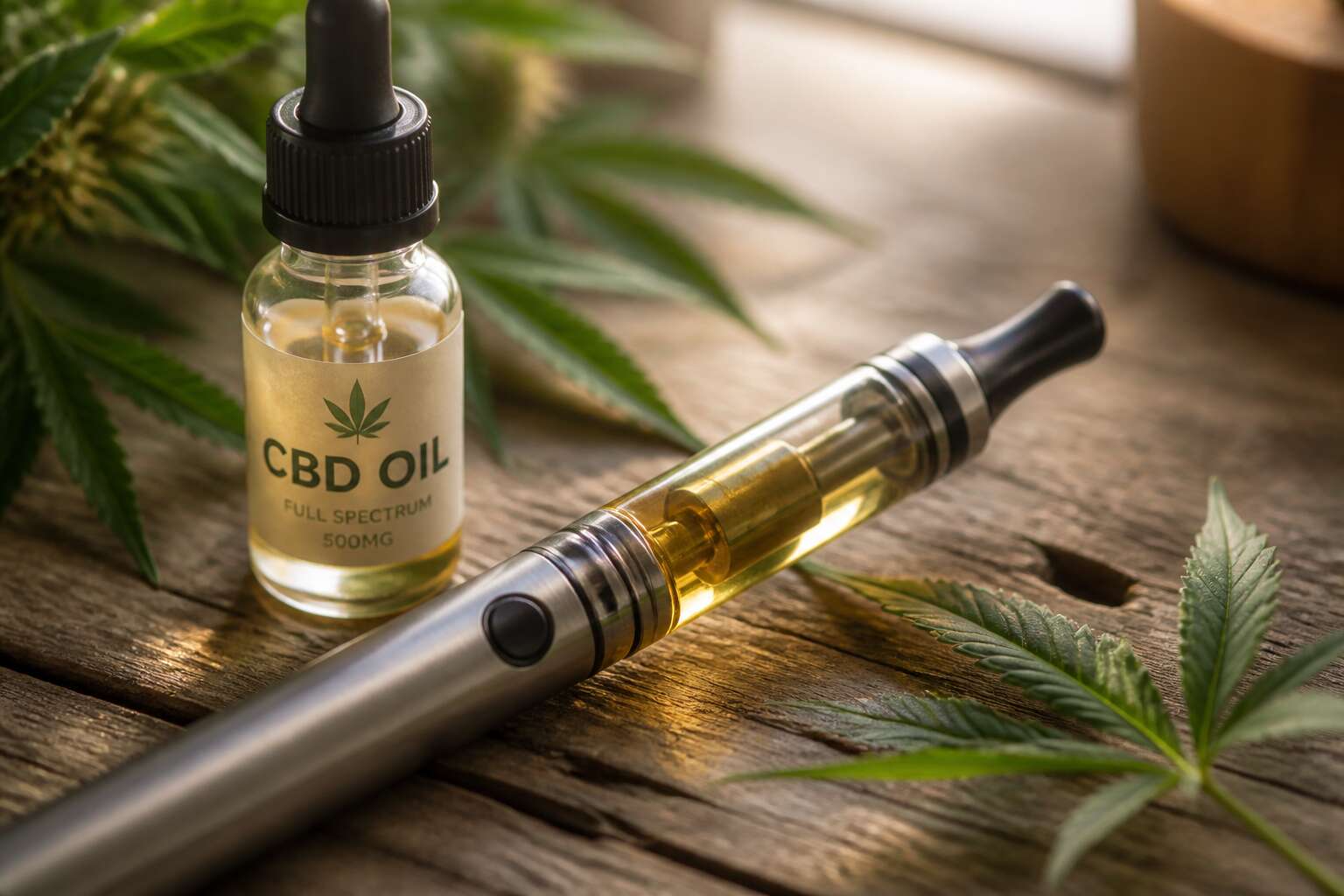
Understanding CBD Vape Liquids
How CBD Infused Vaping Works
CBD oil vape juice holds a tension: oil rendered into vapour, yet the lungs receive it as a mist. In South Africa, wellness trends meet a pragmatic need for relief. Understanding this liquid means understanding how heat transforms a compound we usually swallow.
When you inhale, the atomised droplets of cbd oil vape juice coat the alveolar surfaces. Thin membranes permit direct transfer into capillaries, bypassing the liver’s first pass metabolism. The base liquids, propylene glycol and vegetable glycerin, carry the extract into aerosol without burning it.
- Heat activates the extract into aerosol.
- Inhalation draws it into the bronchial tree.
- Membranes diffuse it into circulation.
Temperature matters! Set too high, the cannabinoids degrade; set correctly, a measured dose enters the bloodstream within minutes. What follows is a shift in baseline tension. The terpenes and minor cannabinoids arrive intact, which is why the quality of the liquid dictates the experience.
Key Differences From Traditional E-Liquids
Open a bottle of cbd oil vape juice and you might mistake it for a standard e-liquid. The real difference hides in the formula! Traditional e-liquids rely on nicotine salts and synthetic flavourings, while CBD vape liquids carry a full spectrum extract that demands a different carrier balance. Propylene glycol and vegetable glycerin ratios shift, because CBD isolates are thicker and more sensitive to heat.
Nicotine e-liquids are designed for throat hit and cloud production. CBD vape juice prioritises cannabinoid preservation. From what I have tested, that changes how manufacturers blend:
- Lower PG percentages to reduce harshness on sensitive lungs
- Higher VG for smoother aerosol, but never so high that the extract separates
- Added terpenes for entourage effect, not just taste
These choices matter in South Africa’s climate, where humidity can affect liquid consistency. What works for a vape pen with nicotine will not protect the delicate compounds in your cbd oil vape juice.
Full-Spectrum vs Isolate vs Broad-Spectrum
Choosing your cbd oil vape juice begins with understanding what you are actually inhaling. Full-spectrum extracts carry the entire hemp profile, including microscopic amounts of THC. In South Africa, this matters, as legal thresholds for THC in consumer products are strict. I have seen many users accidentally purchase a liquid that sits on the wrong side of the law.
Broad-spectrum offers a middle path. The plant’s compounds remain intact, yet the THC is removed during processing. You get the entourage effect without the legal worry. Isolate, conversely, is pure CBD. It is crystalline and flavourless. For some, that simplicity is the point.
- Full-spectrum: richest profile, trace THC
- Broad-spectrum: rich profile, zero THC
- Isolate: only CBD, no other cannabinoids
What works best depends on your tolerance for complexity and your local compliance. A high-quality cbd oil vape juice will label this clearly, separating the confident buyer from the accidental offender.
The Role of Carrier Oils and Diluents
Carrier oils and diluents determine how your cbd oil vape juice feels on the inhale. They carry cannabinoids into your lungs with the least fuss. MCT oil, propylene glycol and vegetable glycerin have different characters.
MCT oil gives a thick cloud and crisp flavour, though some find it heavy daily. Propylene glycol delivers a sharper throat hit. Vegetable glycerin thickens vapour. I watched new vapers chase a smooth draw for weeks, unaware the carrier was fighting them.
A few things worth remembering:
- Pure cooking oils such as olive or coconut oil are not suitable for vaping. They can damage lungs.
- PG and VG are the standard diluents in most commercial cbd oil vape juice.
- Higher VG means bigger clouds and less throat irritation.
Your breathing style should guide the choice. Light and quick, or slow and deep. It determines a pleasant ritual or a regretful purchase!
Common Misconceptions About Vaping CBD
Most first time buyers assume CBD vape liquid produces a high. It does not. The compound is non psychoactive, yet this misconception persists, pushing some toward stronger doses than they need. Another myth holds that any cbd oil vape juice will show up on a workplace drug test. Pure isolate will not. In South Africa, the confusion runs deeper because legal thresholds for THC are low, and many imported products fail to label accurately.
- Stronger concentration does not mean faster relief.
- Cloud thickness has no correlation with CBD content.
- Unflavoured options are not necessarily pure.
The real issue is poor manufacturing. A badly made cbd oil vape juice might contain residual solvents or misreported cannabinoid levels. Buyers keep chasing the myth of a perfect draw while missing the lab certificate behind the bottle. Verified third party testing is the only way to separate fact from marketing, and it remains rare in local stores.
Therapeutic Benefits and Effects
Support for Chronic Pain Management
Chronic pain affects nearly one in five South Africans, yet relief often remains elusive. When inhaled, cbd oil vape juice delivers cannabinoids directly to the bloodstream, offering a rapid onset that many find valuable for breakthrough discomfort. The effects support chronic pain management by modulating perceived intensity without the sedation of conventional options.
Specific benefits observed in practice include:
- Reduced muscle tension within minutes of inhalation
- Lowered nerve-related sensitivity during flare-ups
Vaping allows dose adjustment on the fly, which suits fluctuating pain patterns. I have seen users appreciate this immediacy, particularly when waiting for oral alternatives feels endless.
Influence on Sleep Quality
The most underrated benefit of vaping CBD may be its influence on the quality of rest. For many vapers, cbd oil vape juice becomes a tool for quieting the wakeful mind, shifting the endocannabinoid system toward stability without sedation. Users describe a sense of clarity, not drowsiness, within minutes.
Sleep patterns respond to this shift. Observed effects include:
- Reduced time to fall asleep
- More consistent sleep architecture
- Fewer middle-of-the-night interruptions
The vapor’s quick clearance means the compound does not linger into morning hours. For South Africans balancing high-stress days and restless nights, this precise delivery supports a natural sleep-wake cycle without forcing unconsciousness.
Bioavailability and Onset Time Compared to Edibles
Consider the timing. Inhaling cbd oil vape juice carries cannabinoids into the bloodstream within minutes, while edibles require digestion, taking up to ninety minutes. That gap transforms the experience. The bioavailability of inhaled CBD reaches around 50 percent, whereas edible forms often settle near 20 percent. More of the compound survives to act, and it acts quickly.
These therapeutic benefits surface before you set the device down. Users describe rapid relief from acute stress, a clearing of mental clutter, and visible easing of inflammation. Edibles demand patience and planning, which fails when tension arrives without warning. Vaping offers precision: a draw, a breath, and the effect registers clearly. For South Africans navigating unpredictable hours, this immediate onset becomes a form of control.
What Users Report in Anecdotal Evidence
That control extends beyond timing. In anecdotal accounts, the therapeutic benefits of cbd oil vape juice emerge as a quiet rearrangement of the internal state. Users report a loosening of the chest, an unclenching of the gut, a sense that the body has released something it had been holding.
I find it curious how the pattern repeats across demographics. Builders in Johannesburg, nurses in Durban, remote workers in Gqeberha. They describe the same sequence, a settling of somatic tension followed by an emotional steadiness that feels earned rather than forced.
- Physical lightness often reported within minutes.
- Reduced reactivity to external triggers.
- A feeling of being more present in the body.
These are subjective markers, yet they align with how cannabinoid receptors modulate the stress response. For many, cbd oil vape juice delivers cumulative benefits, a daily rebalancing that restores agency without dramatic fanfare.
Limitations of Current Research
The therapeutic benefits of cbd oil vape juice often hinge on consistency rather than intensity. Research suggests that regular, low-dose inhalation supports endocannabinoid tone, which regulates pain perception, immune response, and emotional equilibrium. This is different from the acute relief many expect. The compound works cumulatively, adjusting the system’s baseline over weeks.
Yet the evidence base carries real gaps. Most published studies examine oral or sublingual CBD, not inhaled forms. Aerosolized delivery offers faster plasma peaks, but no controlled trials confirm its long-term safety. The pulmonary effects of daily vaping remain largely unmeasured.
- Short-term studies show promise for stress reduction.
- Long-term outcomes are simply undocumented.
- Dose standardization across vape products is inconsistent.
South African consumers therefore navigate a landscape where anecdote outpaces science. The available research is promising, but it is not yet definitive. For those using cbd oil vape juice, that distinction matters.
Choosing a High-Quality Vape Oil
Reading Third-Party Lab Reports
Every bottle of cbd oil vape juice claims purity, but claims are cheap. A certificate of analysis from an independent laboratory is the only evidence that matters, if you know how to read it properly.
I look for the cannabinoid profile, not the marketing slogan. A full-spectrum claim should appear in the terpene markers, not just in bold font. I check the solvent residue numbers, the heavy metal screens, and the mycotoxin results. In South Africa, these documents distinguish a curated product from a gamble.
- Confirm the batch number on the report matches the bottle
- Verify the lab is ISO 17025 accredited
- Demand a detection limit below 0.1 percent for unknowns
Reading these reports is necessary. A clean report does not guarantee a pure experience, but it removes the cheap additives that spoil the ritual.
Evaluating THC Content and Legal Compliance
The proper South African shopper asks one question before any other: how much THC is in this cbd oil vape juice? The answer should be a crisp “non-detectable,” not a wink. The law expects no measurable amount of delta-9 tetrahydrocannabinol to survive the extraction process. A vendor who mumbles about trace amounts that won’t show up is performing a social ritual of his own. Your lungs deserve better manners.
Legal compliance appears in the method, not the mood. The certificate must state the analytical technique used for THC quantification, typically HPLC or GC-MS, and the result must fall below the limit of quantification. Any number above that threshold turns your purchase into a legal liability. Customs officers notice these details. In practice, the document stays beside the bottle, a quiet habit observed among serious consumers.
Understanding PG, VG, and MCT Base Ingredients
Most vape oils fail before they reach your lungs, not because of the CBD, but because of the base. The trio of propylene glycol, vegetable glycerin, and medium-chain triglycerides defines the entire experience. PG carries flavour and produces a sharp throat hit; VG generates dense vapour and a smoother draw; MCT, often coconut-derived, acts as a thinning agent. What matters is how they interact. A balanced formula will state its ratios plainly. A vague label hints at compromise.
- PG dissolves concentrates effectively but can irritate sensitive airways.
- VG is thicker and may clog cartridges or wick poorly.
- MCT offers quick absorption but requires correct dilution for vaping equipment.
Your cbd oil vape juice should specify which base is used. Quality begins with that transparency.
Flavor Profiles and Natural Terpene Additives
Your nose knows before your lungs do. A quality cbd oil vape juice should offer a fresh, herbal aroma, not artificial candy sweetness. Natural terpene additives deliver distinct aromas and effects, while artificial flavourings often indicate lower grade extraction.
- ‘Naturally derived’ on the label signals transparency
- Vague ‘flavour blend’ descriptions invite suspicion
- Extraction methods differ widely across producers
When selecting a profile, prioritise strain-specific terpenes such as myrcene or limonene. These compounds shape the experience, from calming to stimulating, without chemical shortcuts. Consider the source: plants grown in clean soil versus laboratory isolates. Terpenes degrade under heat, so correct storage and vape settings are essential. A reputable cbd oil vape juice displays its terpene profile on the label.
Potency and Dosage Considerations
A label claiming 1000 mg does not guarantee 1000 mg in your lungs. I have tested cbd oil vape juice products that delivered far less per puff. The real measure for any cbd oil vape juice is milligrams per milliliter, not total bottle content. A 30 ml bottle at 300 mg total gives 10 mg per ml.
Start with a low dose, around 5 to 10 mg per session. Wait fifteen minutes and assess! Vaping delivers effects quickly, so you can adjust sooner than with edibles. Your tolerance and body weight matter. A 90 kg person may require double the dose of a 60 kg person.
Keep a journal of puff count and effects. That is the only way to calibrate your dose. Buy from producers who state exact mg/ml on the label. A reputable cbd oil vape juice will show a precise figure. If the label only says ‘potent,’ the producer is hiding something. South African buyers face this problem.
Price vs. Quality: Red Flags to Avoid
Price alone never reveals the true quality of cbd oil vape juice. In South Africa, a suspiciously cheap bottle often hides poor extraction methods, synthetic additives, or unstable base ingredients. Producing a clean, consistent product costs real money, and cutting that cost means cutting corners somewhere you cannot see.
Watch for specific red flags when comparing options. Labels that omit exact mg/ml, bottles with no batch number, and brands that refuse to show third party lab results are all warning signs. Also be wary of unnaturally bright colours or an overly sweet aroma, which indicate artificial flavouring.
- No clear dosage per millilitre
- No physical address or contact details
- Prices far below every competing product
A reputable producer will answer technical questions about their cbd oil vape juice without hesitation. If the seller cannot explain what is inside, treat that silence as a reason to walk away.
Proper Usage and Vaping Tips
Selecting the Right Vape Hardware
The right hardware transforms cbd oil vape juice into a precise experience. For South African users, where humidity affects cartridges, choose a device with adjustable airflow. Begin with a low wattage, around 10 watts, and increase gradually. Ceramic coils deliver the terpenes more faithfully than metallic ones, so the oil keeps its intended profile.
Consider these hardware essentials:
- A variable voltage battery
- A glass tank with replaceable coils
- A mouthpiece with a narrow bore
Draw slowly and hold the vapor for three seconds. Store your cartridge upright, away from sunlight, to preserve viscosity. A clean coil every two weeks prevents the burnt taste that masks the natural flavor.
Optimal Temperature Settings for CBD
Temperature governs how cbd oil vape juice reveals itself. At 160°C the flavour arrives bright and airy. Push toward 180°C and the draw gains body and warmth. Beyond 200°C the delicate compounds degrade, and the taste turns harsh. South African users in humid coastal areas often need less wattage than those inland.
These reference points mark the usual thresholds:
- 165°C to 175°C for a gentle, flavour-forward session.
- 180°C to 190°C for balanced effects and visible vapour.
- 195°C or higher only for thick oils that resist wicking.
The ideal setting shifts with the season. Johannesburg’s dry winters thicken the oil, demanding more heat. Durban’s humidity lets the same cbd oil vape juice flow freely at lower temperatures. If the first puff tastes scorched, the coil is too hot. If there is no flavour, the setting is barely above room temperature. Trust the vapour’s texture as much as the display reading.
How to Start With a Low Dose
Starting with a low dose feels counterintuitive when you want immediate relief. But the body’s endocannabinoid system responds better to gradual introduction. I always tell first timers to treat cbd oil vape juice as a tool for observation. Their own physiology signals the right amount. Take one short puff, wait ten minutes, observe how your chest feels and your mind settles. If nothing happens, that is information, not failure!
A practical schedule might look like this:
- Puff for one second, inhale, hold for two.
- Rest for ten minutes.
- Repeat only if needed, adding two seconds per puff.
Patience is the real skill. Overdoing any vape product leads to drowsiness or a dry mouth. Neither serves you. Less heat and less vapor allow the compound to work without overwhelming your system.
Steeping and Storage for Freshness
Proper usage of cbd oil vape juice hinges on controlled draws and regular cleaning. Debris in the atomizer alters flavour and reduces vapour quality. Wipe the mouthpiece weekly with isopropyl alcohol. For storage, keep the bottle upright in a cool, dark cabinet. Heat degrades cannabinoids. Light oxidises terpenes.
Steeping involves letting the blend mature. This step raises smoothness. Follow these steps:
- Shake the bottle vigorously for thirty seconds.
- Remove the dropper cap and let it breathe for two hours.
- Recap and store away from sunlight.
- Repeat once daily for three days.
Steeping softens harsh notes. Fresh cbd oil vape juice often tastes sharp. After a few days, the profile rounds out. Also, avoid refrigerating. Condensation introduces moisture, which separates the base. Buy small batches to prevent prolonged storage. A three week turnover ensures peak potency and flavour.
Recognizing When to Adjust Consumption
Most vapers notice the same cbd oil vape juice hits differently after a month. The reason is not the bottle. It is your system. Tolerance accumulates quietly. What once delivered a noticeable wave now feels flat. That is your cue to reassess, not to double the dose blindly.
Recognising when to adjust consumption starts with observing the gap between puffs and effect. If the familiar calm arrives later than usual, or the throat hit feels rougher, your settings may need attention. When you vape more frequently without deepening relief, the balance is off. Keep a simple log: puff count, time of day, effect. Over three days, patterns emerge.
Some users must factor in body weight and metabolic rate. Lighter people may need fewer draws. Heavier users process cannabinoids faster.
Cleaning and Maintaining Your Device
Most vapers only notice the coil when the flavour turns sharp, but the damage started weeks earlier. Residue from cbd oil vape juice builds up in thin layers across the atomiser, altering vapour texture and potency. Cleaning every seven to ten days preserves the profile. I keep it simple:
- Disassemble the tank and rinse the glass with warm water.
- Soak the coil area in isopropyl alcohol for thirty minutes, then air dry completely.
- Wipe the battery contacts with a dry cloth to avoid oxidation.
The difference shows in the first draw. A clean wick pulls the cbd oil vape juice evenly; a neglected one masks the beneficial compounds. South African humidity complicates things, as open tanks attract moisture from coastal air. Store the device upright and keep spare coils sealed. That habit extends hardware life and keeps every puff predictable.
Legal, Safety, and Side Effects
Federal vs State Regulations on Hemp Derivatives
Cross a provincial border, and the legal status of hemp derivatives changes overnight. National law allows low-THC CBD products, but provincial enforcement often contradicts central rules. Consider this product: its status shifts depending on your location. The South African Health Products Regulatory Authority limits CBD to 0.0075% THC. Cross that line, and the product becomes a prescription medicine!
Safety adds another layer. Unregulated batches may harbor heavy metals or residual solvents. Side effects, while uncommon, include:
- Dry mouth
- Dizziness
- Drowsiness
These symptoms pass quickly. However, mixing cbd oil vape juice with prescription drugs can produce dangerous interactions. Provincial guidelines vary sharply. A product sold legally in Johannesburg might be confiscated in Durban. The legal situation remains unpredictable, and buyers face real risks.
Potential Side Effects and Drug Interactions
In South Africa, the legal status of cbd oil vape juice varies by province. SAHPRA limits THC to 0.0075%, but enforcement differs at regional borders. I have seen products sold legally in Johannesburg confiscated in Durban, so verify local rules before you buy.
Safety testing presents another variable. Unregulated batches might contain heavy metals or residual solvents. Side effects are typically mild and transient:
- Dry mouth
- Dizziness
- Drowsiness
Drug interactions pose a greater risk. The product inhibits liver enzymes, which can intensify the effects of anticoagulants and antidepressants. Consult a pharmacist if you take prescription medication, and start with a low dose.
How to Identify Contaminated or Unsafe Products
One audit found that 31% of unregulated vape cartridges contained undeclared synthetic cannabinoids. That statistic should sharpen your senses when you shop for cbd oil vape juice in South Africa.
Start with the label. A legitimate product lists a batch number, expiry date, and a QR code linking to a third-party lab report. Vague packaging is a red flag. Contaminated cbd oil vape juice often hides behind generic branding.
- Cloudy liquid or sediment that does not dissolve
- A harsh chemical taste or burning throat sensation
- Headaches or nausea after a single puff
These signs point to residual solvents or heavy metals. Consider the vendor too. A supplier who cannot explain SAHPRA limits or produce a certificate of analysis is not worth your money. If you suspect a problem, stop use immediately. Your body reacts faster than any lab report.
Popcorn Lung and Other Respiratory Concerns
In South Africa, legal cbd oil vape juice must align with SAHPRA regulations, yet compliance does not guarantee respiratory safety. Diacetyl, the culprit behind bronchiolitis obliterans, or popcorn lung, appears in some flavoured e-liquids, though reputable CBD manufacturers avoid it. I check every certificate of analysis for diacetyl and acetyl propionyl residues before inhaling anything!
Respiratory concerns extend beyond that condition. Fine particulates from overheating carrier oils can irritate airways, and certain terpenes trigger bronchial responses in sensitive users. Chest tightness within minutes of inhalation serves as an immediate warning sign. Shortness of breath, persistent coughing, or wheezing after moderate use warrant medical attention.
Safe Vaping Practices for New Users
Starting with cbd oil vape juice means pacing yourself before anything else. Even with SAHPRA compliant products, your first session should last no longer than a few gentle inhales. Wait ten minutes to observe your body’s response before continuing. This prevents the dizziness or nausea that often follows overconsumption.
Legal safety requires verifying THC content below 0.001%, yet your personal reactions deserve equal attention. Side effects such as dry mouth, temporary lightheadedness, or a mild cough are common initially. They usually resolve with hydration and a lower wattage setting.
A sensible checklist for beginners:
- Keep a written record of each dose and its effects.
- Never vape on an empty stomach.
- Avoid combining with alcohol or sedatives.
Adjust your routine based on those recorded responses, not guesswork. That discipline turns cbd oil vape juice into a predictable experience.

0 Comments