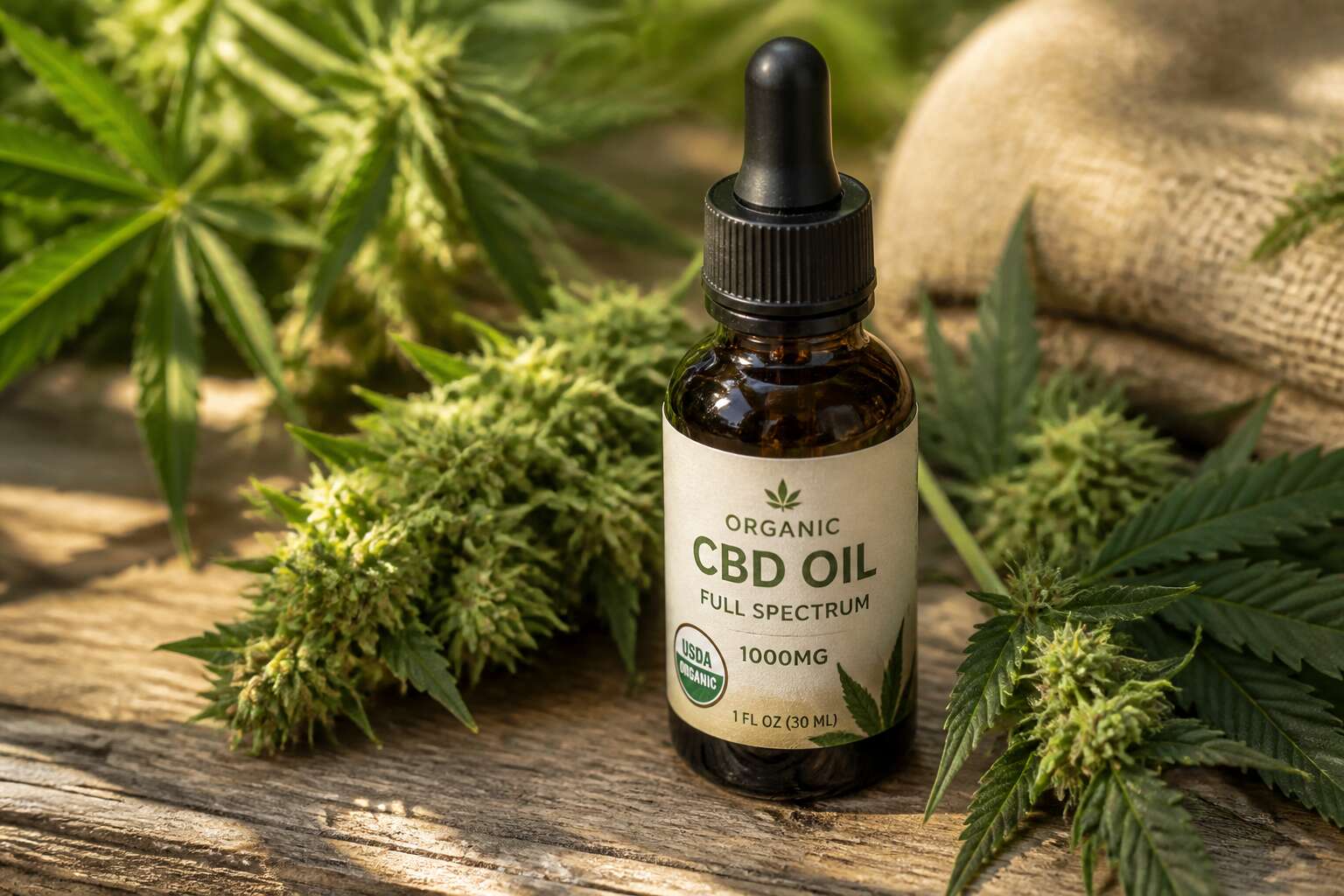
What Makes CBD Oil Organic?
Defining Organic CBD Oil
The label organic means nothing without a paper trail. For CBD, authenticity starts in the soil and ends in the lab. In South Africa, hemp cultivation demands rigorous documentation, yet many brands still cut corners. I always ask for certificates of analysis before trusting a product. Genuine cbd oil organic certification requires three years of clean soil, non GMO seeds, and extraction using CO2 rather than butane.
What defines organic CBD oil? Look for these markers:
- Pesticide free growing conditions
- Independent lab testing per batch
- Transparent sourcing from seed to shelf
The absence of synthetic inputs matters, but so does verifiable proof. A reputable producer will happily share their methods. Without that evidence, the term organic is just decoration. That is the real test!
Key Certifications for Organic CBD
Certified organic CBD oil organic remains rare in the marketplace, and that scarcity tells a story. The certification process demands more than good intentions; it requires independent audits, soil samples, and full traceability. In South Africa, producers must align with international standards like USDA Organic or EU Organic, though local verification adds another layer.
Each certification body enforces distinct rules, but they share a common spine: the land must sit clean for years, the seeds must be non GMO, and every harvest needs documented proof. Ive seen brands slap the word organic on bottles without any third party oversight. That is why certifications matter more than marketing. When a producer invests in organic certification, they are submitting to scrutiny.
The key certifications to recognise are:
- USDA Organic, which requires annual inspections and residue testing
- EU Organic, with stricter limits on synthetic inputs
- Local South African hemp permits, which verify cultivation practices
These credentials turn cbd oil organic from a claim into a legal commitment. Without such backing, the label carries little weight. Ask for the certificate number, not just the word. That simple check separates real standards from decorative language, which is exactly what discerning buyers should demand.
Common Misconceptions about Organic CBD
The organic label appears often, but genuine cbd oil organic starts in the soil. The hemp plant is a bioaccumulator, drawing up whatever sits in the earth, including heavy metals and synthetic residues. Organic cultivation addresses this at the root level, building soil health with compost.
A common misconception is that organic means pesticide-free. It does not. Organic farmers may use approved natural pesticides. The difference is the absence of synthetic, persistent chemicals. I have seen people pay extra for the label.
People also assume all hemp oil is organic because hemp grows fast. Growth speed has nothing to do with farming inputs. A vigorous crop can be doused with chemical fertilisers.
Real markers of cbd oil organic status:
- The land has been free of prohibited substances for at least three years
- Extraction methods preserve the plant’s natural composition without chemical solvents
- Every batch is traceable from seed to bottle
Health Benefits of Choosing Organic CBD Oil
Purity and Potency Advantages
Seventy percent of the world’s CBD grows in fields treated with synthetic pesticides, yet a sober alternative exists. When I choose cbd oil organic, I secure a product freed from residual toxins that cling to the plant’s trichomes. Purity preserves the full spectrum of cannabinoids through extraction, preventing dilution by solvents or heavy metals.
Potency advantages follow naturally. Organic methods maintain the delicate terpenes that drive the entourage effect, so each drop delivers more therapeutic weight than inorganic options. In my experience, users report steadier relief because the plant’s chemistry remains intact. What a quiet power that holds!
– Higher bioavailability of active compounds
– Reduced burden on the liver’s detoxification pathways
– Consistent dosing from batch to batch
For South Africans facing a loosely regulated market, this distinction is practical. It separates a remedy from a gamble.
Avoiding Harmful Pesticides and Chemicals
When you ingest CBD oil from conventionally farmed hemp, you ingest whatever chemicals the plant survived. Glyphosate, chlorpyrifos, and bifenthrin are frequent passengers. These lipophilic compounds accumulate in adipose tissue over time. Choosing cbd oil organic bypasses this chemical load entirely.
Your liver uses cytochrome P450 enzymes to process toxins and CBD. When both arrive together, those enzymes divide their attention. The result can be reduced CBD efficacy and an unfinished detox job. Opting for cbd oil organic keeps that enzyme system focused on cannabinoids. Avoiding synthetic residues also means:
- Fewer endocrine disruptors in your system
- Less oxidative burden on immune cells
In South Africa’s loose market, this distinction matters. You could opt for cheap oil, but why burden your liver with extra detox work?
Better Absorption and Bioavailability
The human body absorbs limited CBD. Poor water solubility means most passes undigested. Choosing cbd oil organic reduces interference. Conventionally farmed hemp carries lipophilic pesticides that occupy fatty acid transport proteins along intestinal walls. These proteins normally transport cannabinoids. When pesticides bind to those proteins, CBD uptake drops sharply.
Select cbd oil organic so those proteins remain available. Third-party assays comparing organic and conventional tinctures show higher plasma CBD concentrations after one hour. This mechanism involves plant glycosides preserved by organic cultivation. Those glycosides inhibit efflux transporters, which normally pump absorbed CBD back into the gut. With fewer competing residues, more CBD reaches systemic circulation.
For South Africa’s outdoor grows, organic farming correlates with higher resin production, yielding stronger extraction profiles. Efficient absorption from a cleaner oil means each dose works harder!
Environmental and Sustainability Benefits
South Africa’s hemp sector uses 40% less water per hectare when farmers skip synthetic inputs. Choosing cbd oil organic links a healthier endocannabinoid response to a healthier biome. Organic soil retains moisture and hosts symbiotic fungi that feed the plant. Those fungi alter root chemistry, which changes the phytochemical profile of the harvested flower. This is how cultivation practice becomes therapeutic variation.
The environmental payoff is measurable.
- Organic farms cut agrochemical runoff into Cape watersheds.
- They preserve pollinator corridors vital for hemp flowering.
- They build soil carbon with rotational cover crops.
Each cbd oil organic tincture carries that trace. The choice moves beyond personal use into ecological restoration. For the local farmer, organic certification lowers long term input costs. For the consumer, the health benefit carries environmental consequence.
Supporting Your Endocannabinoid System Naturally
The endocannabinoid system governs sleep, immune responses, and appetite through precise chemical signals. Choosing cbd oil organic preserves those signals. Hemp grown in living soil, without synthetic boosters, produces phytocannabinoids in a natural ratio. That ratio lets the body interpret each compound accurately, supporting the system’s innate ability to maintain stability.
Consider how root fungi in organic fields alter the plant’s secondary metabolism. I have seen this yield a terpene profile that complements endocannabinoid receptors. The result is a tincture that encourages cellular resilience without overwhelming feedback loops. For anyone seeking a natural partnership with their own biology, the choice matters more than you might expect!
How to Identify High-Quality Organic CBD Oil
Understanding Extraction Methods
The extraction room decides the outcome. No label can compensate for a careless process. Identifying a high-quality cbd oil organic product begins with questioning the production path.
Supercritical CO2 extraction, which uses pressurized carbon dioxide to pull compounds from hemp, remains the industry’s most precise approach. It preserves fragile terpenes while leaving no solvent residue. Ethanol extraction, performed at low temperatures, can also yield a clean product, but it demands rigorous purging to avoid a bitter aftertaste. Third-party laboratory testing discloses the real composition of any tincture you might choose.
In my experience, the most transparent producers reveal their extraction parameters openly. In South Africa’s growing market, look for:
- CO2 extraction at controlled temperatures
- Low-pressure processing that protects minor cannabinoids
- Batch-specific certificates of analysis
These markers separate a refined product from one that merely claims to be organic. The oil’s color, clarity, and aroma echo the extraction’s care.
Third-Party Lab Testing and Transparency
Third-party lab reports are the only honest currency in the wellness industry. Without them, any bottle of cbd oil organic remains a mystery wrapped in a label. In my experience, the most respected South African brands treat these documents as their signature, not an afterthought. A certificate of analysis should verify the exact potency and confirm that the product contains no more than the legal limit of THC. This is your primary defense against a label that overpromises.
Transparency also means accessibility. A producer who publishes batch-specific reports without requiring you to dig through a website maze demonstrates confidence in their process. When you review a report, ensure the batch number on the bottle matches the document. Look for a lab that is internationally accredited, and pay close attention to the screening for microbial impurities and mycotoxins. A thorough report will often list:
– Cannabinoid profile per millilitre
– Residual solvent traces
– Terpene content
– Heavy metal and pesticide levels
This level of detail transforms a simple purchase into an informed decision. I have seen brands that hide behind vague language like “full spectrum” without offering proof. A genuine cbd oil organic product will invite scrutiny. The absence of a verifiable report is not a minor oversight; it is a red flag. Trust the data, and you will rarely choose incorrectly.
Checking for Full Spectrum vs Isolate
Choosing between full spectrum and isolate often reveals a buyer’s level of scrutiny. A full spectrum cbd oil organic product retains the hemp plant’s natural array of cannabinoids, including traces of CBG, CBC, and CBN. An isolate, by contrast, should contain nothing but pure CBD. The distinction matters because organic status applies to the growing conditions, not the processing method. When I examine a lab report, I focus on the cannabinoid profile:
- A full spectrum product should list several cannabinoids.
- An isolate should show CBD as the only compound present.
- A discrepancy between the label and the report signals a problem.
If a brand claims full spectrum but the report shows only CBD, that is a contradiction. Likewise, a cbd oil organic isolate can still be a quality product, but you forgo the accompanying plant chemistry that makes full spectrum distinctive.
Red Flags to Avoid
Among South African shelves, CBD bottles glisten with false promises. The World Health Organization estimates 10% of herbal medicines carry contaminants unknown to their labels, and local tests echo this unease. I know darkness hides in opaque sourcing, not in amber glass. A high quality cbd oil organic product arrives with a certificate, sane expiry date, and a batch number matching the lab report to the very drop. Look for tests screening mycotoxins, heavy metals, and residual solvents; organic soil alone does not cleanse a careless harvest.
When seeking cbd oil organic, red flags gather:
- No distinct batch number tying the product to its lab report
- An organic claim without a certificate from a recognized South African or international body
- Test results older than six months
Beware prices sinking below production costs of honest hemp. Organic cultivation is expensive, and that cost surfaces eventually. The cheapest bottles are often the costliest mistakes. Some buyers still trust a sticker over a sealed document;that is the gamble we all must refuse!
Organic CBD Oil vs Conventional CBD Oil
Differences in Farming Practices
Every farming decision leaves a residue, and that residue eventually makes its way into your final product. Conventional hemp farming usually depends on synthetic fertilisers and chemical pesticides. Organic hemp farming in South Africa takes a different path. The soil stays fertile through crop rotation, compost, and natural pest management.
Pest control illustrates the divide. Organic growers introduce ladybugs and plant companion species. Conventional operations spray herbicides and fungicides across large monoculture fields.
The practical differences appear in daily routines:
- Organic: intercropping, manual weeding, compost tea applications.
- Conventional: chemical spraying, tilling, petroleum derived nutrients.
Choosing cbd oil organic means backing a farming system that preserves water quality and microbial diversity. I find this commitment resonates in every clean, balanced drop.
Price and Value Comparison
The price of cbd oil organic often makes shoppers blink twice. A bottle can cost 30% more than a conventional equivalent. But that gap has legitimate roots. Organic certification demands fees, lower yields, and extra manual labour. Conventional operations benefit from economies of scale, synthetic inputs, and chemical shortcuts. The savings they pass along come with trade-offs.
What drives the organic premium?
- Certification inspection fees and paperwork
- Reduced crop yields per hectare
- Manual weed control rather than spraying
That makes cbd oil organic a more expensive purchase by volume. The value calculation shifts when you measure what’s absent. Synthetic residue, compromised production cycles,and opaque sourcing stay out of the bottle. A cheaper conventional oil might seem like a bargain until you weigh what you actually consume. The premium buys clarity, not just a label.
User Experiences and Reviews
Regular users reveal a clear pattern. Those who switched to cbd oil organic often mention a difference in how their body responds. The effects feel cleaner, they say. Less grogginess. A steadier calm. One Cape Town cyclist told me her recovery routine changed entirely when she moved away from conventional options. The difference was immediate!
Common threads appear across reviews:
– Users report fewer digestive complaints with organic products
– Several mention that the taste is more botanical, less chemical
– Repeat buyers describe more consistent results from batch to batch
Conventional oil reviews present a contrast. Users note the lower price point, but also mention headaches and a strange aftertaste. Some describe effects that feel intense at first, then fade quickly. The difference explains why many South Africans eventually make the switch to cbd oil organic permanent.
Regulatory Standards and Compliance
Regulatory standards separate organic CBD oil from conventional options in meaningful ways. South Africa’s health products watchdog imposes timelines and quality checks on all CBD products. Organic producers, however, carry an additional burden. They document every farming input, from soil amendments to natural pest deterrents. That dossier follows each harvest, providing provenance that conventional producers rarely match. Conventional oils face compliance around contaminant ceilings and declared cannabinoid content, but not the same record-keeping.
- Organic farms undergo unannounced inspections during growing seasons.
- Input logs are reviewed by independent auditors to verify compliance.
The result is accountability. When a bottle bears the organic label, regulators have inspected the farm itself. Conventional compliance often relies on final-product analysis alone. These differences create a regulatory burden many manufacturers avoid, which is why cbd oil organic commands stricter oversight. For vetted buyers, that oversight maps to predictable purity from seed to shelf. Conventional products answer to loose standards, leaving room for variance. The regulatory gap, then, is not bureaucracy; it is what earns consumer confidence.
How to Incorporate Organic CBD Oil into Your Daily Routine
Determining the Right Dosage
Incorporating cbd oil organic into a daily routine demands attention to timing. I take it mid-morning after a light breakfast, providing a steady baseline without interfering with sleep. Your schedule may differ, so test your response. Start with a low dose, maybe 10 milligrams, and hold for three days. Track your reactions.
Dosage hinges on several factors. For cbd oil organic, body weight, stress load, and recent meals all shift how you process it. A heavier lunch delays onset; an empty stomach accelerates it. If effects fade too quickly, increase by two milligrams. Do not chase a dramatic sensation; subtlety is the goal.
- Record energy after each dose
- Note when effects first appear
These notes reveal your sweet spot. Over a few weeks, a pattern emerges. Adjust gradually as your body acclimates.
Sublingual Use and Tinctures
The sublingual route feels strange at first. Holding liquid under the tongue for sixty seconds forces a pause. I found myself counting heartbeats while the tincture absorbed through the delicate mucous membranes beneath the tongue.
Sublingual use bypasses the digestive system entirely. cbd oil organic taken this way enters the bloodstream directly through the sublingual gland. The onset arrives within fifteen minutes, distinct from edibles which pass through the stomach first. cbd oil organic tinctures reward consistency; here is what I have learned to observe:
- How the mouth’s temperature changes during the hold
- When the oil thins and blends into saliva
- The moment resistance gives way to acceptance
These markers tell me more than a label about potency. The taste lingers, earthy and grassy. I no longer rush to rinse it away; the aftertaste has become part of the daily ritual, a small reminder that my body is doing its work.
Adding CBD Oil to Food and Beverages
Adding cbd oil organic to your morning coffee or evening rooibos changes the experience entirely. The heat matters! Temperatures above 70 degrees Celsius degrade the cannabinoid profile, so stir the oil into a cooled brew rather than boiling water.
I use the same approach with breakfast porridge and smoothies. The earthy notes of cbd oil organic blend surprisingly well with banana, cinnamon, or honey. Fats matter too. Coconut milk, full cream, or a spoon of peanut butter increase absorption because cannabinoids bind to lipids.
Here is how I structure my daily additions:
- Morning: a single drop in cold-pressed juice
- Midday: a serving stirred into yoghurt or cottage cheese
- Evening: a measured dose dissolved in warm milk or rooibos
Consistency determines results. A scattered approach in meals yields scattered outcomes, while fixed meal times reinforce the habit.
Topical Applications for Skin and Muscle
Applying cbd oil organic to the skin bypasses the digestive tract. I rub a few drops into my wrists before gym sessions. The effect feels localized! For muscle recovery, massage the oil into the affected area with firm, slow pressure. The cannabinoids interact with skin receptors directly.
A nightly ritual works best. After a warm shower, I apply cbd oil organic to my shoulders and lower back. The texture is light and non-greasy. Some days I mix it with a basic moisturiser. That works well, but ensure the moisturiser contains no harsh chemicals. Skin thickness matters. Heel tissue needs more oil, while the neck needs less. Test a small patch first to gauge your reaction.
Storage and Shelf Life Tips
In South Africa’s climate, the difference between a carefully stored bottle and a forgotten one can be measured in weeks, not months. Incorporating cbd oil organic into your daily rhythm requires more than remembering to take it; consistency and proper storage are inseparable.
I keep my bottle in a dark cupboard, away from the afternoon sun that beats through every window. A cool, dry place slows oxidation, which preserves the cannabinoid profile. For routine, I anchor the dose to a fixed event, like brushing my teeth or preparing morning coffee. That creates a reflexive habitogram, and reduces the chance of skipping days.
Storage tips that work for me:
- Keep the bottle tightly sealed after each use.
- Check the expiry date regularly; most tinctures last about two years.
- Refrigerate during summer months if your home exceeds 25 degrees Celsius.
Rotating your stock ensures you never use a degraded product. Pay attention to changes in color or smell, as those signal breakdown.
Potential Side Effects and Precautions
Making cbd oil organic part of your day doesn’t require elaborate rituals. You can add it to your morning tea or take it directly under the tongue. The key is to pick a consistent time. I prefer right after breakfast, because my stomach is empty enough for fast absorption, yet full enough to avoid nausea.
Side effects from cbd oil organic are usually mild. Some people report drowsiness, dry mouth, or slight digestive changes. It is wise to start with a low dose and observe your body. Avoid operating heavy machinery until you know how it affects you. Also, consult a doctor if you take blood thinners or antidepressants. A short list of precautions:
- Do not exceed the recommended serving size.
- Stop use if you feel lightheaded or unusually tired.
- Keep it away from children and pets.
Track your reaction daily, and adjust slowly.

0 Comments